
Physical Shares to Demat in 2026: What Investors Need to Know
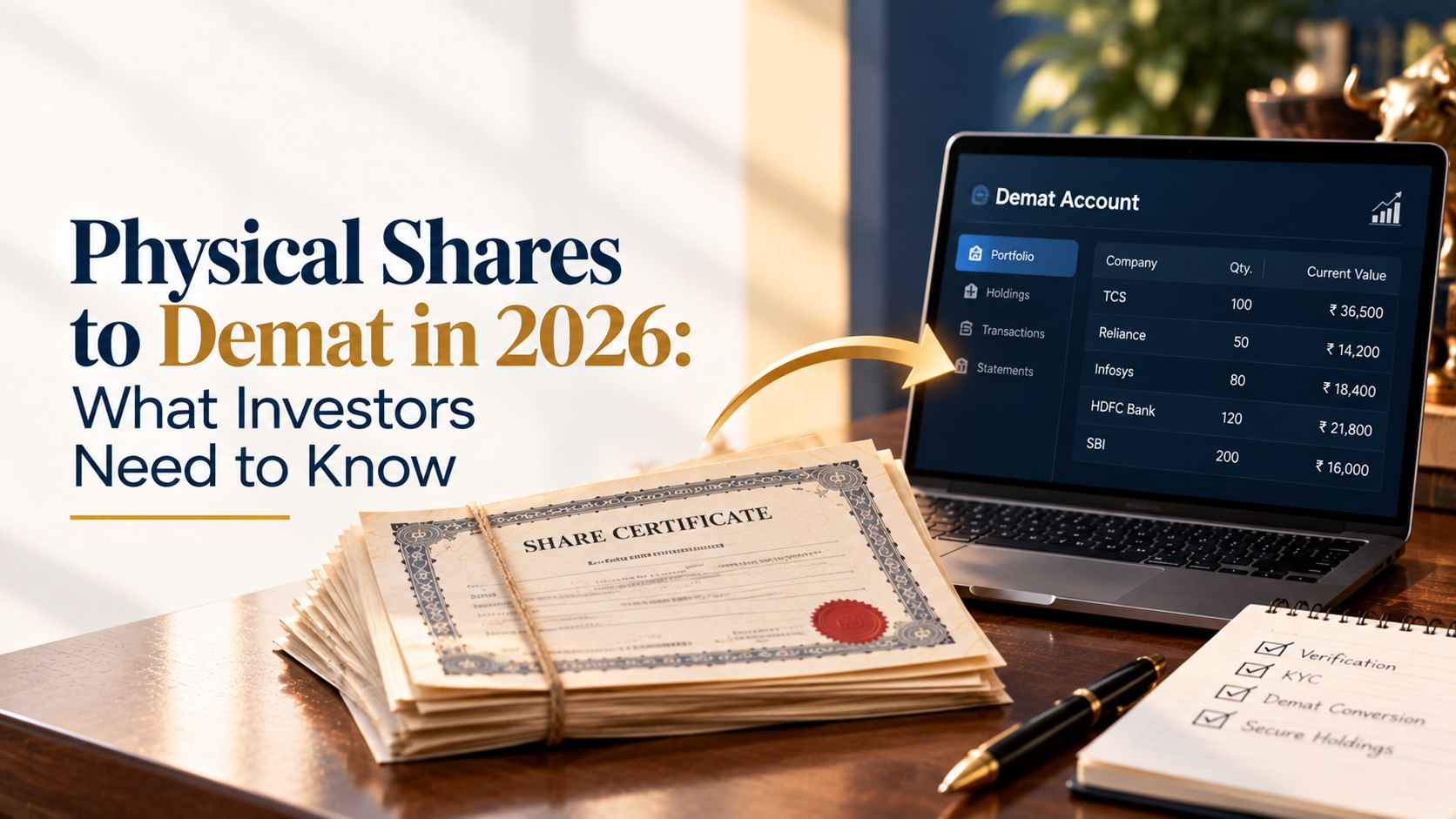
Physical share certificates can represent valuable investments, but managing old paper-based holdings can become complicated when KYC details are outdated, certificates are misplaced, or the original shareholder is no longer available. India’s securities ecosystem has increasingly moved toward electronic holding, making dematerialisation an important part of managing old share investments.
What Is Dematerialisation?
- Dematerialisation, commonly called ‘demat,’ means converting physical securities into electronic form.
- Instead of holding a paper certificate, securities are credited to the investor’s demat account.
Why Do Investors Still Have Physical Shares?
- Investment was made before widespread demat adoption.
- Investor stopped tracking the investment.
- Shareholder moved to another city.
- Family was unaware of the investment.
- Original shareholder passed away.
- Dividend payments were never collected.
What If the Shareholder Has Passed Away?
- The process can involve a death certificate, legal-heir/succession documentation, PAN/KYC, demat details, transmission documentation, company/RTA verification and original certificates where holdings are physical.
- SEBI issued a July 23, 2026 circular aimed at simplifying and standardising the framework for transmission of securities.
Can Every Physical Share Certificate Simply Be Deposited Into a Demat Account?
- Not necessarily. Company status, shareholder records, certificate validity, name matching, corporate actions, transfer restrictions and other factors may need to be checked first.
How Topline Solutions Can Help
Topline Solutions can support investors with review of old share certificates, identification of company/shareholding details, documentation checklists, dematerialisation support, KYC-related documentation, legal-heir/transmission documentation, coordination with company/RTA/depository processes and procedural follow-up.
Leave a Reply