
Unclaimed Shares: What Happens When Your Shares Become Unclaimed?
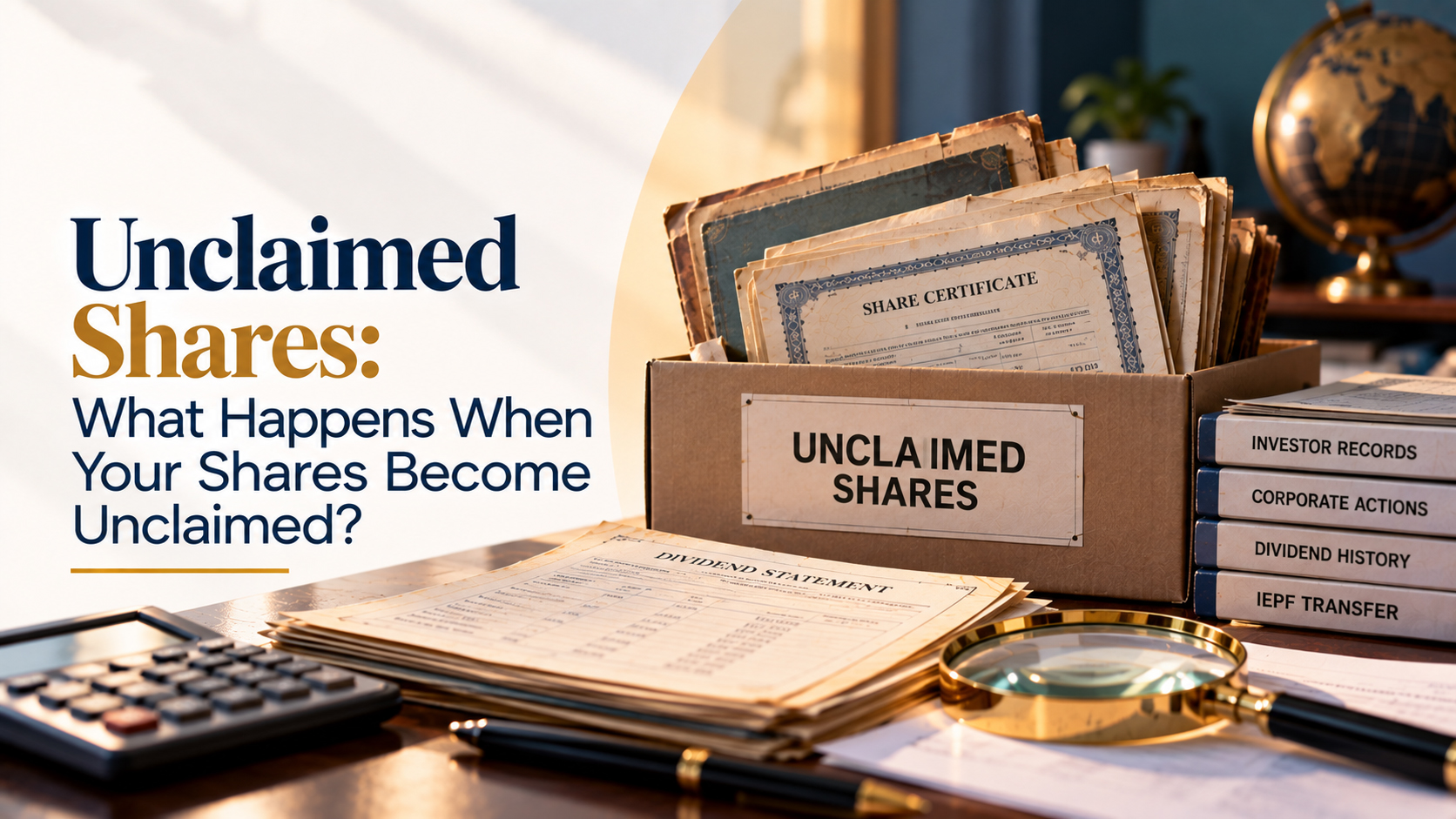
Many investors are unaware that shares purchased years ago can become difficult to trace or claim, especially when there has been a change of address, missing KYC information, death of the shareholder, or years of unpaid dividends. For listed companies, securities that remain unclaimed can be transferred to a suspense account under the applicable SEBI framework. Investors can subsequently approach the company or its Registrar and Transfer Agent (RTA) to establish entitlement and claim the securities.
Why Do Shares Become Unclaimed?
- Changed address without updating company records.
- Dividends remain unpaid for several years.
- Original shareholder passed away and legal heirs are unaware of the investment.
- Physical share certificates were misplaced.
- KYC/contact information is outdated.
- Investor has forgotten about an old investment.
- Corporate actions created additional securities that were never claimed.
What Happens to Unclaimed Shares?
- Depending on the circumstances, securities may be moved into a suspense account maintained by the company.
- For securities transferred to IEPF, the rightful claimant needs to follow the applicable IEPFA claim process.
- Unclaimed does not automatically mean the investor has lost ownership; the applicable claim and verification process determines recovery.
How Can Investors Recover Unclaimed Shares?
- Identify the company and folio/demat details.
- Check whether dividends or securities have been transferred to IEPF.
- Verify KYC information.
- Collect ownership documents.
- Complete the applicable claim, transmission or dematerialisation process.
- Coordinate with the company, RTA, depository or IEPFA, depending on the case.
How Topline Solutions Can Help
Topline Solutions assists investors with investment tracing, document collection and verification, eligible physical-share dematerialisation, IEPF-related claim documentation, legal-heir/transmission documentation and procedural coordination. Every case is different, and the documents and process depend on the nature of the investment and claimant’s circumstances.
Leave a Reply